
The Loft at 56
An ode to the paterfamilias of modern dance music, revelry and resilience, and the indefatigable spirit of the Loft's attendees

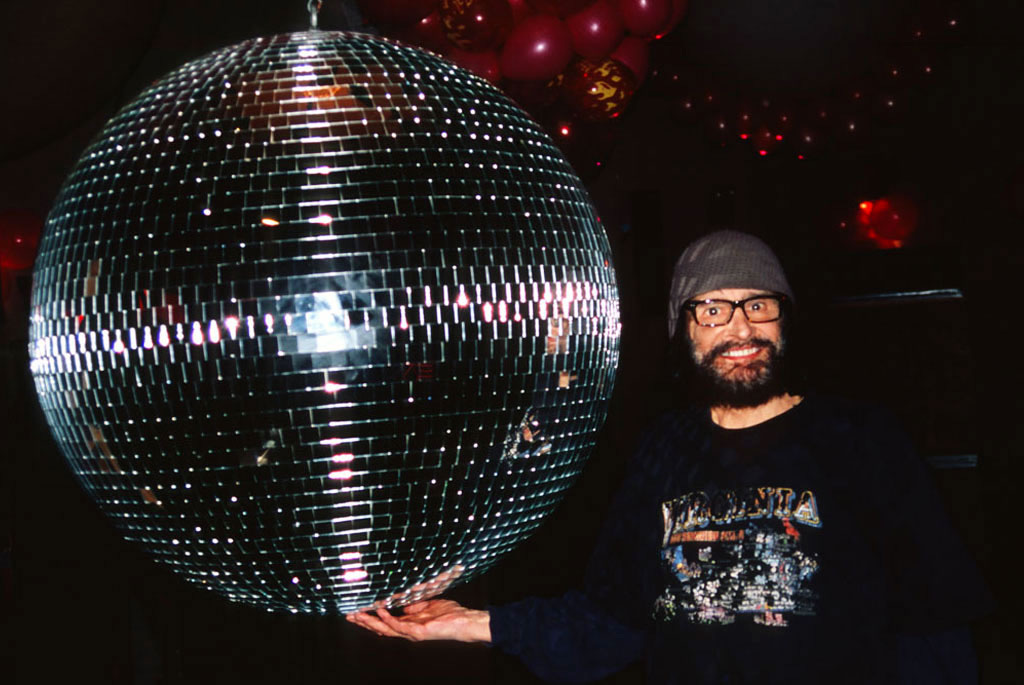
Photos by Sandy Moon
Every Valentine’s Day finds me scrambling to get gifts for my sweethearts, while also avoiding the flower vendors squeezing sidewalk space alongside the black exhaust ice of winter. I almost always forget to get a ticket for The Loft, which some 56 Valentine’s Days ago, began a party that joyously continues on to this day. As I wrote for a Pitchfork feature “A Night at the Loft” a dozen years ago:
Valentine’s Day in 1970 marked the birth of David Mancuso’s Loft, the party from whence all other modern dance music emanates. This is not an exaggeration. From Larry Levan’s Paradise Garage to Frankie Knuckles’s Warehouse parties in Chicago, from the Hacienda to Berghain to that illegal loft space you went to the other weekend in Bushwick (or Berlin, or Budapest), whether you move to disco, house, acid, techno, trap, dubstep or whatever new dance genres might arise—all can claim the Loft as paterfamilias.
I didn’t get to go this year, but the spirit of the Loft is never far from my intentions, my listening, my thinking about community, even if the folks I encounter daily have never set foot on its dancefloor or felt the angels kiss of the climactic balloon drop.
Raised as an orphan, Mancuso had to make his own family out of friends and fellow music fanatics. A product of ’60s counterculture, Mancuso was inspired to seek out new systems of living. He loved music but was never going to become a musician himself. Mancuso mailed out invites to a bunch of pals and threw a party on Valentine’s Day 1970 in his loft space home at 647 Broadway. “Love Saves the Day” read a flier (and there may have been some of that acronym in the punch bowl).
Amid turmoil and nightlife restrictions throughout the city, the home later dubbed “the Loft” served as a safe haven in the years following the Stonewall Riots. Before the notion of a “safe space” entered parlance, Mancuso’s home was a place for queer and straight alike—whether white, black, or brown—to express themselves and move as one on the dancefloor. The joy and inclusivity that attendees experienced in Mancuso’s home soon inspired others to start their own parties.
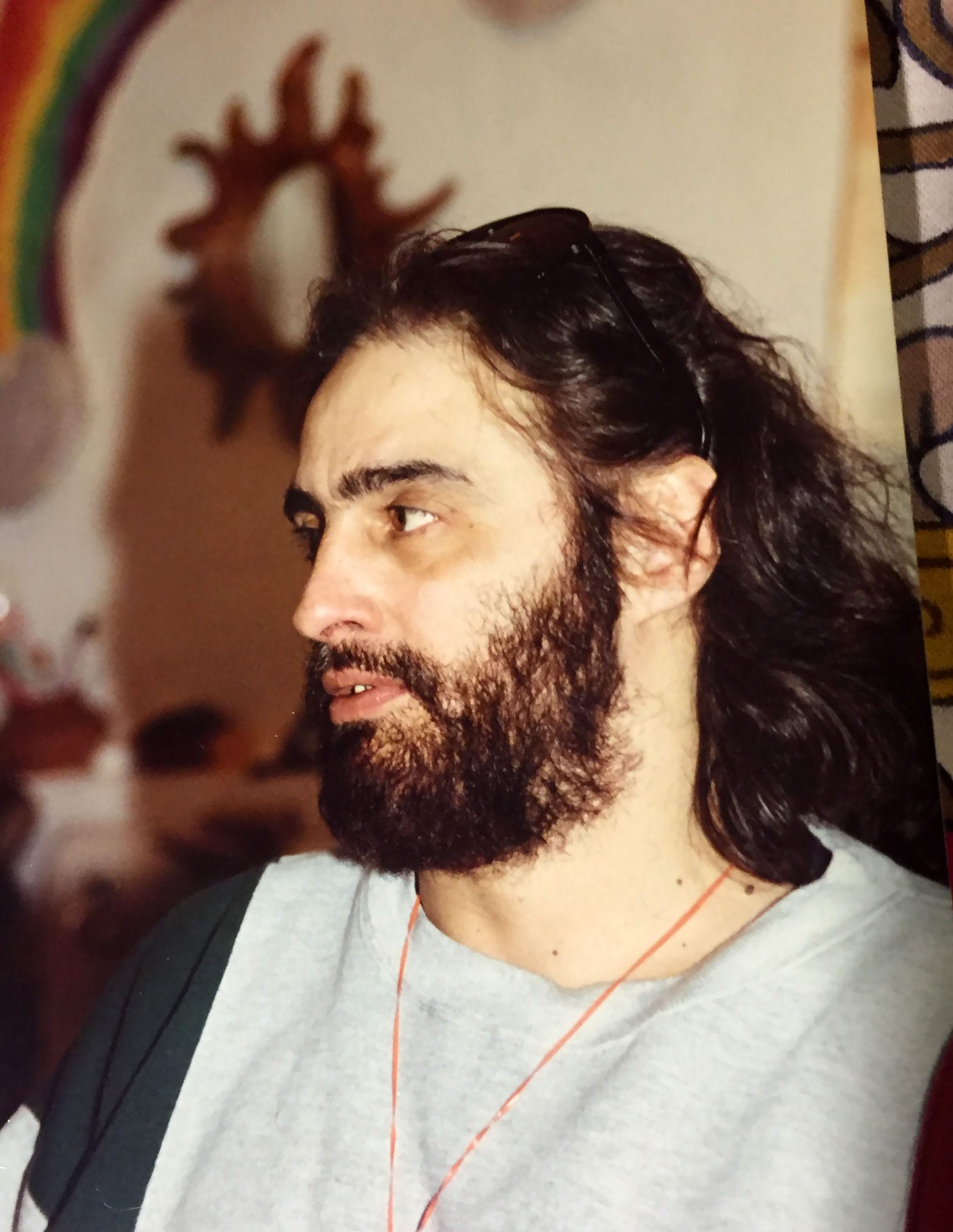
Photo by Sandy Moon
“For me, the core [idea behind the Loft] is social progress,” Mancuso said in a rare interview with Red Bull Music Academy. “How much social progress can there be when you’re in a situation that is repressive? You won’t get much social progress in a nightclub… In my zone, you can be any age, a drinker or non-drinker, a smoker or a non-smoker. And that’s where I like to be.”
I was deep in suburban Texas at the end of the 20th century when I first learned of the Loft and its music. A messageboard comment by Dan Selzer mentioned a new compilation, David Mancuso Present The Loft. If one was a rockist, or punk rock snob, or a music dilettante who deemed disco music to “suck,” this set would expand your parameters. It was my first time hearing Arthur Russell, an instance of realizing there was overlap between minimalist composition and dancefloor ecstasy. In fact, in the hands of this guy, they just might be the same thing.
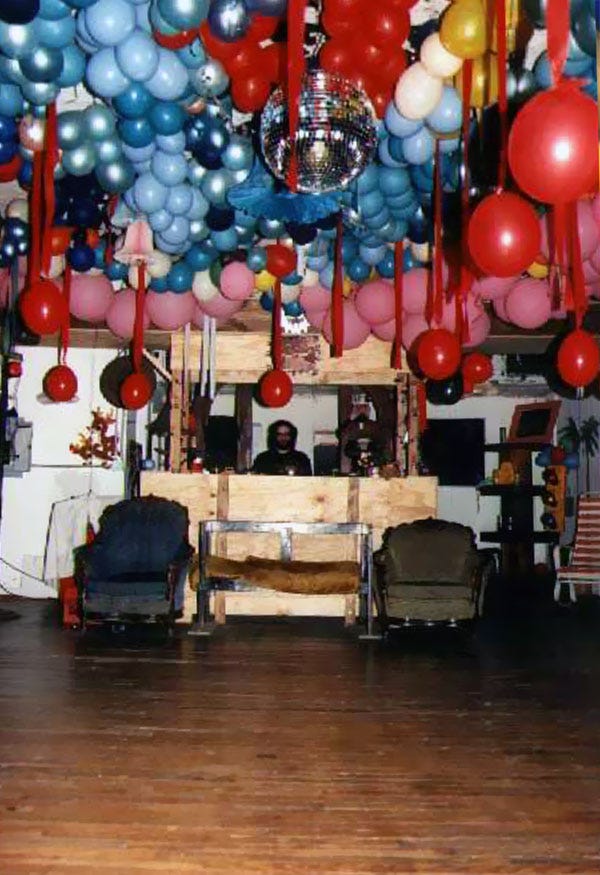
Photo by Sandy Moon
That wasn’t the only connection that set made, between rock and house music, between Philly soul and jazz. What good were genre tags and walls when the greatest urgency is to tear down the barriers between us? The Loft became a crucial soundtrack when I decided to up and move to New York City mere months later. I still think about how the subway rumbles through a track like “Yellow Train.”
The Loft’s soundsystem is infamous, a set of seven Klipschorn floorstanding speakers arrayed in a circle around the dancefloor that takes most of the weekend to set up and remains the gold standard for most club systems. And yet the Loft’s sound is deceptive. It is immersive and crystalline, revealing details in records you might have heard a hundred times on earbuds, but it is not loud. The bass does not concuss your insides, and your ears do not ring with tinnitus the next day. It remains the gold standard for most audiophile folks. To hear overly familiar tunes on that system is to experience them for the first time, to actually live inside of their sacred space.
And so much of the music I associate with the Loft does feel sacred to me. I pulled out some random 12”s last night and thumbed through my copy of Martin Beck: Last Night, which traces the arc of Mancuso’s last Loft apt at 99 Prince Street, some 13 hours’ worth of music. It’s fascinating to see on the page the underground hits of that year 1984, but also to see the long stretches where Mancuso put on full album sides, be it As Falls Wichita, So Falls Wichita Falls or Steve Miller Band’s Fly Like an Eagle. Some songs instantly sprung to mind as “Loft” classics. Others I sorta forgot and then remembered. A few tunes:
Slow, ritualistic, and deeply spiritual, “Anambra” mixes African and Nyabinghi drumming as the group chants “Om Mani Padme Hum.” A Buddhist mantra in Sanskrit, the line suggests a spiritual path wherein impure body, mind, and speech can lead towards enlightenment. Often serving as the closing song for his sets, Mancuso imparted such spiritual wisdom into the music itself.
Maybe the song that made me understand Mancuso’s vision for musical history? Or rather, Berry Gordy kneecapped Eddie Kendricks’s solo career outright and you won’t often find the song in any Motown history. Yet Mancuso could hear something uplifting in this seven-minute stunner and anyone who experienced the song at the Loft definitely had it change their mind. It’s about love and it’s about enhancing your mind.
Facing the crime, urban rot, drug fear, and early years of Reagan’s presidency, I can only imagine the uplift that D Train’s “Keep On” imparted on the Loft’s dancefloor. In the past two years, it’s been hard to fathom just how to keep on, but what else is there to do? The echo woodblock that sits in the background at the start of this 9-minute epic slowly makes its way forward and at the epic breakdown, it traces its way across the stereo field in the most magical way imaginable.
This tune popped up in Last Night. The cover is so awesomely weird and the dub mix is so nuts. One of those dollar bin denizens that can pingpong around in your skull.
All four tracks on this Black Uhuru 12” are Loft staples for good reason and I can just imagine Mancuso taking a smoke break during this one.
Whew. Words fail in the presence of this sublime 9-minute tune. Each time through, I am struck anew by the breakdown, but also by the build-up towards the end.