
Steve Tibbetts Pt. 2
On meditation, children, his collaboration with singing nun Chöying Drolma, and fighting ICE in the streets of Minneapolis

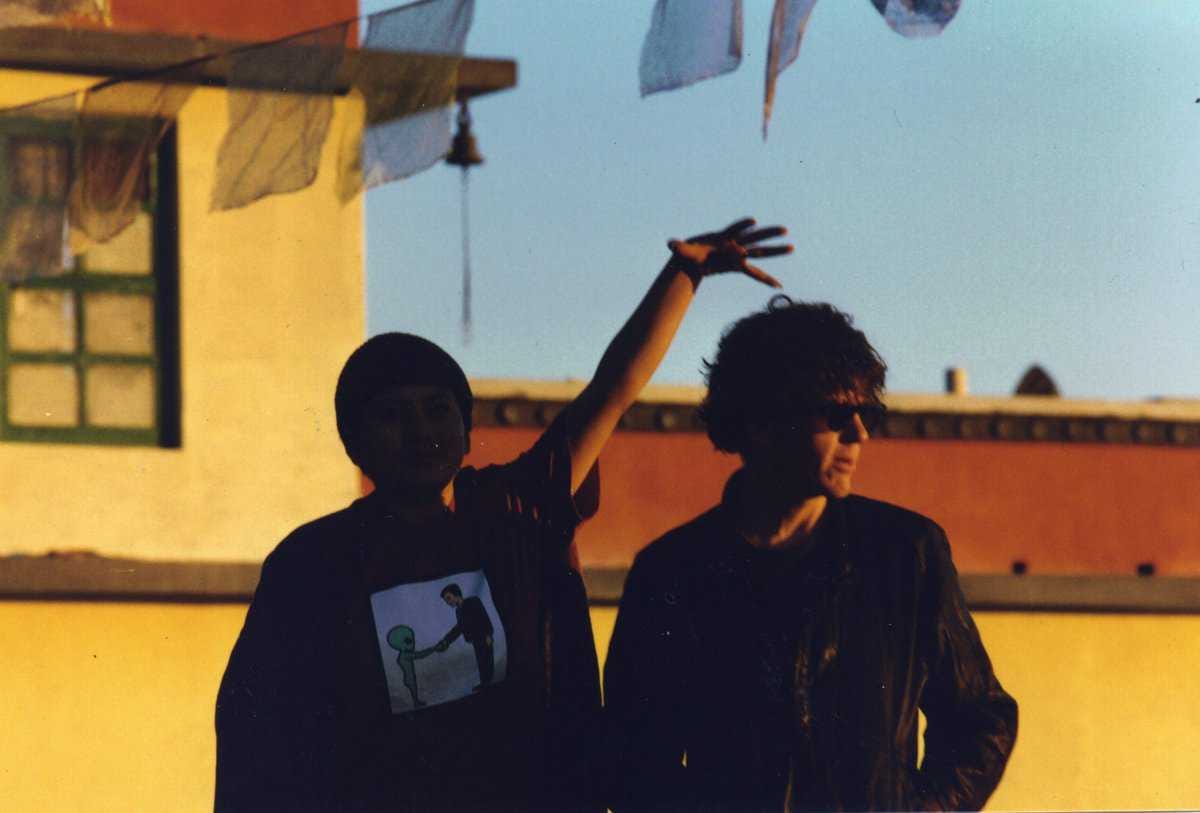
Part Two of my conversation with Steve Tibbetts. You can read Part One here. As some eagle-eyed readers may have noted, the conversation took place last December. Come January, things got rather warzone-esque in Tibbetts’ hometown of Minneapolis. My intention to ask follow-ups took a backseat to the chaos unfurling on the ground as an occupying force attempted to take over the city. I wanted to ask him more about what it was like during those fraught months, but held off. Since Tibbetts works as an LPN, the execution of another nurse in the community was intense, to say the least.
Paying subscribers will be able to read about some of this behind the paywall.
So you’re kind of studying this thing. And then, did your practice sort of deepened as you were traveling through like, you know, Southeast Asia?
No, no, my practice, I wish I could say it deepened at all. You know, I have no problem with music, I have a lot of confidence in the music I do. I seem to have been born with some sort of natural talent. It’s always been there. Meditation, I’m not that good at. Nonetheless, the best place for really taking a crack at meditation is in solitary retreat. For that, it deepens, after a fashion, in southern Colorado at a retreat facility called Dorje Khyung Dzong. Some of the practices I’ve taken on require solitary retreat, practices where you don’t see anybody for weeks at a time. Do I like it? I’m not crazy about it. But the alternative is worse.
What would you say is your morning meditation? How long are you sitting for?
An hour and a half. It’s still mostly distraction, as I’m sure you know.
Yeah, yeah. I mean, we have a nine-year-old. So it’s like, I’m lucky if I get 20 minutes...
Hey, man, that is your meditation. You know? That comes first. I had triplets. I didn’t even want kids, but somebody said, “You don’t want kids? I think it’s the secret to life.” And it was! It was the best thing that ever happened to me. If I want to understand my role in whatever the branch of this tree is or whatever…You should have more.
I can’t afford it!
Yeah, you can’t afford it, but then you have to, so you find a way.
Solitary retreat is good because my phone is off. I stow it with the retreat masters, Shelia and Dan at DKD. They know it’s a closed retreat. Nobody’s going to knock on my door. There’s nothing to do. I might feel terribly isolated and bored and make a list of things I just have to do when I get home. And I do. After many years, my daughter Miriam knew to ask when I came home, “Dad, can we see your crazy list?” I’d be doing an afternoon session, two weeks into a month of retreat, and be sort of tormented about something that I just had to do when I got back. I’d get up, write my little note, get it off my back, then go back to my session. After a month of solitude I might have a page of absurd musical instructions saying “do the thing with the fifth and have Jim come under and play the relative minor then bring the drums in. Probably two solos.” The crazy list. What was I thinking? I don’t know. You know, get home, unpack, look at it, crumple, wastebasket. “Dad, let’s see your crazy list!”
The kids loved it when I was in retreat, because I was as good as gold for the entire month of December, knowing retreat was coming up. Then I’d disappear to retreat for January. Perfect for that month as well, good as gold. And then living in a serene retreat backwash through February I’d still be amenable, pretty nice to be around, so that’s three months out of a year, it’s worth it. At that time my wife wasn’t working because we had enough money coming in from the Chöying Drolma record to make it possible for her to be a stay-at-home mom.
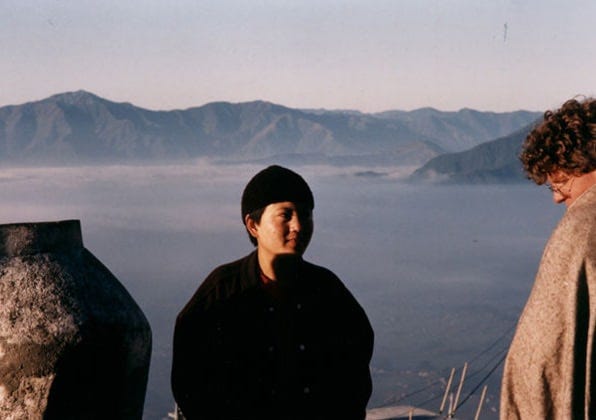
Was the Chöying Drolma record a commercial success?
It was like catching lightning in a bottle, yeah. So naturally we tried to do it again, always a mistake. We were very lucky the first time.
How did you come to collaborate with Chöying?
I was working in Kathmandu in the south part of the valley in a village called Pharping, a very special spot. I would spend the early part of the evening on the roof of the monastery in Parpang with two translators, Andreas Kretschmar and Eric Schmidt. We’d drink a beer, a big one, a Bintang. One night Andreas said: “Are you ready for a little concert? Let’s go record this nun. Let’s go listen to her sing.” We walked down and there was Chöying Drolma in a shrine room singing. I brought the recording back to Minnesota and added some instruments, just for fun. I was mostly trying to get a software program going, Mark of the Unicorn’s Digital Performer, to see if I could sync up tape and samples. I sent the finished tape to John Diliberto, a writer somewhere in Philadelphia, and Rob Simonds at Rykodisc. Rob called back.
Rykodisc was doing very well then. They had just won a Grammy with David Bowie’s Sound and Vision. Rykodisc was the first company to start bringing out compact discs in the U.S. Other record companies thought, “What is this CD thing? This is a fad.” But then, like ECM, companies realized they’d be able to sell their entire catalog a second time. Rykodisc wanted to do the project with Choying. I called up ECM. I sent it to them and said, “Do you want to do this?” They said, “We’ll get back to you.” A few calls like that. What we call “the long no.”
As a musician you have to deal skillfully with subtle forms of humiliation. It’s just the pavement we’re walking on, right? Then, Rykodisc’s Joe Boyd got in touch and said, “We’ll offer whatever you want for this record within reason: control over the cover, marketing input, a reasonable advance, and we’ll get you out on the road. We’re prepared to offer you the highest possible royalty we can.”
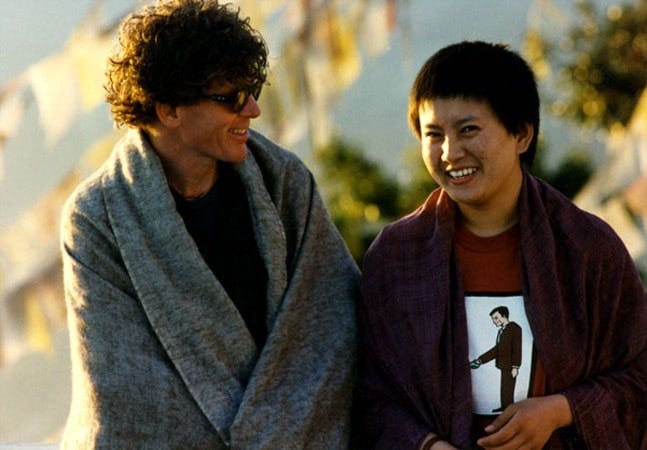
What was it about her that made you want to record it in the first place?
The quality of her voice is astonishing. The only person I’ve heard come as close to singing with a full set of overtones with great depth in the body is Meredith Monk. Meredith, she’s not a large person. But what a voice! Listen to a “Gotham Lullaby” and “Traveling” on Dolmen Music. Chöying and I spoke in person and on the phone and developed a friendship. I said, “We can do this. I can bring you some money, and we can work together and create something.” And she did. She said her dream in life was to create a school for nuns who had been sort of cast aside, women who weren’t allowed to study like the monks.
It’s unbelievable, you’ve traveled in India, so you know that South Asian culture can be one of the most patriarchal in the world. It’s deep-rooted and persistent. That didn’t stop Chöying, she didn’t just walk through these doors, she kicked them down. She did eventually make her school, she built it and staffed it. She also funded a dialysis center. She made housing for a cultural phenomenon in Newari society where, if your son dies, his wife might be cast out into the street. Abandoned. Chöying made a home for these women. So she walked the walk.
What was her first reaction to this music you had made?
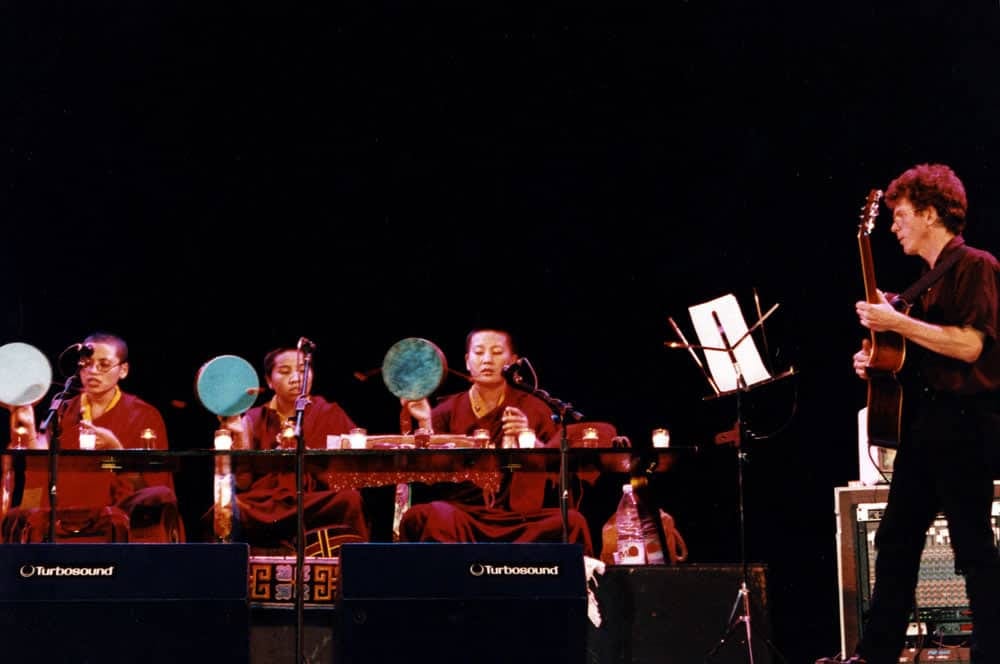
I used her voice tracks and made a little recording here, in my studio. I overdubbed guitar and drones. I sent it to her and advised her to set up publishing to work out mechanical royalties, so that money gets to her. As far as the music, I think she was puzzled by it. As soon as we got on the road, she was not puzzled by it. The first gig at the Iron Horse in Northampton was a trip. A bit of a shock. She walks out with Marc and I onto the stage, pin spots lighting up where she’s sitting, little bottles of water, monitor wedges; the whole gigging world I’ve been in since I was 14. For her it was something she’d never been through before. The two nuns she brought with her were absolutely terrified. But after a while, we coalesced, and we turned into a gang of good road dogs. They knew how to set up. They’d help us load in, and they were as good as anybody on the road, any metal band.
I was always struck by the presentation of Chö. It’s not really like a Nonesuch Explorer record that tells you everything. There’s no presentation, not like translations of what she’s singing, or how the collaboration came together.
I love the Nonesuch Explorer series. I listened to every single release. Made tapes, mixtapes of the releases. I didn’t want to do that sort of presentation with Chö. It’s been done. I guess it keeps it from being this documentarian sort of field recording. But I had to proceed with caution. I went to the abbot of the monastery, Chokyi Nyima Rinpoche, who I’ve known since 1985, and I said, “Is this okay? Do you know what we’re doing? We’re going to make a record. We’re going to put this out in the market. Is that okay?”
He was totally on board. The blowback came from Western acolytes: “How dare you?” That sort of thing. Not surprising. People who have converted to a religion or political party tend to be a little more strident in their approval or disapproval. Nonetheless, we made our own converts on the road. The concerts were very good, good enough so that sometimes I’d have to turn away onstage when I felt like I might cry. I thought that if people saw a tear coming down my cheek, they’d think I manufactured it.
So you feel the second record doesn’t quite capture what you captured the first one?
No. You get lightning in a bottle, you get lucky. You think, “Let’s do it again.”
But you guys were kind of together in the same place making it?
For Selwa, Chöying was onboard a little bit more, talking about what she’d like to hear under her singing. She understood the process more, not surprising since she is about the smartest person I’ve ever met. We would talk about the Tibetan, and how to translate it. We would talk about the order that compositions should appear in. You don’t put a Mahakala liturgy, a protector deity, at the front of the album. That would be like eating your dessert first at a Michelin star restaurant. It would be untoward.
So we began to sequence the music in a way that made more sense. Don’t put the Book of Revelations right after Genesis. It’s not so much that Selwa didn’t work, it’s just that the first one was truly magical. For all of us. Lightning in a bottle. For Marc, Chöying, and me, it was a once in a lifetime thing. Musicians come together as they always do and suddenly realize they’re in the midst of something quite special and greater than the sum of its parts. It’s a cliché, but it does happen. When it does, you have to stand back and respect it.
But trying to make it happen, you know, good luck with that. Or like The Köln Concert, which ECM is flogging right now in its 50th year. You know the story behind that. Look this up on the BBC. It’s called For One Night Only. It’s a great rundown of how it all went down with the promoter, Freda, who booked the concert, and others who were involved. How Jarrett rejected the piano and stalked off the stage. They found another one, they tuned it as best they could. He sits down, starts playing and as she said, “We knew right then that this was something very special.”
For paid subscribers, some Tibbetts tidbits from the frontline this past January:
