
Michael Brook
On building the infinite guitar, the yin-yang of Jon Hassell, Cobalt Blue sinking like a stone, and unwittingly becoming the architect for "world music"

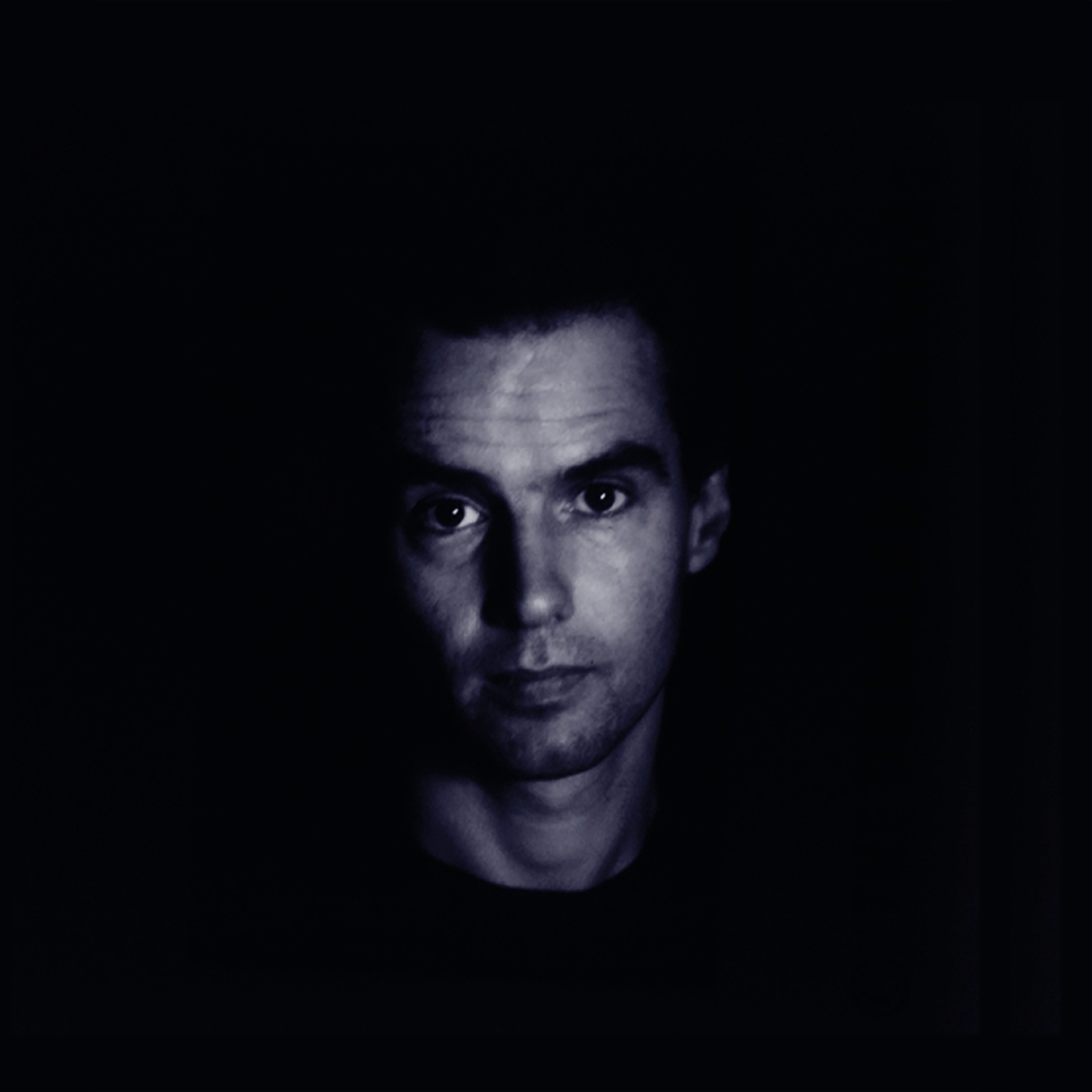
I first encountered Canadian guitarist/ composer/ producer Michael Brook via his 1985 debut Hybrid, released on Brian Eno’s classic EG Records imprint. Both Eno and Daniel Lanois’s name on the cover was all the seal of approval I needed, as it sounded a bit like the dark ambience of Eno’s On Land, but with a bit more hoarfrost on the edges. It remains one of my go-to winter morning listens.
But it vaguely crossed my mind that I never came across any other Brook albums in digging. Which in hindsight makes sense in that his follow-up, 1992’s Cobalt Blue, was released on 4AD and –in Brook’s words– “sank like a stone” upon release (also, it was never pressed up domestically). Further research revealed the real reason, in that Brook’s true claim to fame lay in being an architect in the late 20th century sound of “world music.” Most famously, he collaborated with Nusrat Fateh Ali Khan on his seismic 1996 Night Song, an album that redefined Qawwali (and Asian/Pacific Islander music at large) for the next century.
Brook’s C.V. touched on many profound, ancient musical traditions, from Carnatic music and Senegalese mbalax to Armenian folk and Algerian raï, adding just enough 20th century backdrop to entice new listeners while only gently irking traditionalists. And while he may not have made inroads in alternative rock during the early ‘90s with Cobalt Blue, that album did wind up reaching the ears of director Michael Mann and Brook did wind up having a healthy film soundtrack career as well.
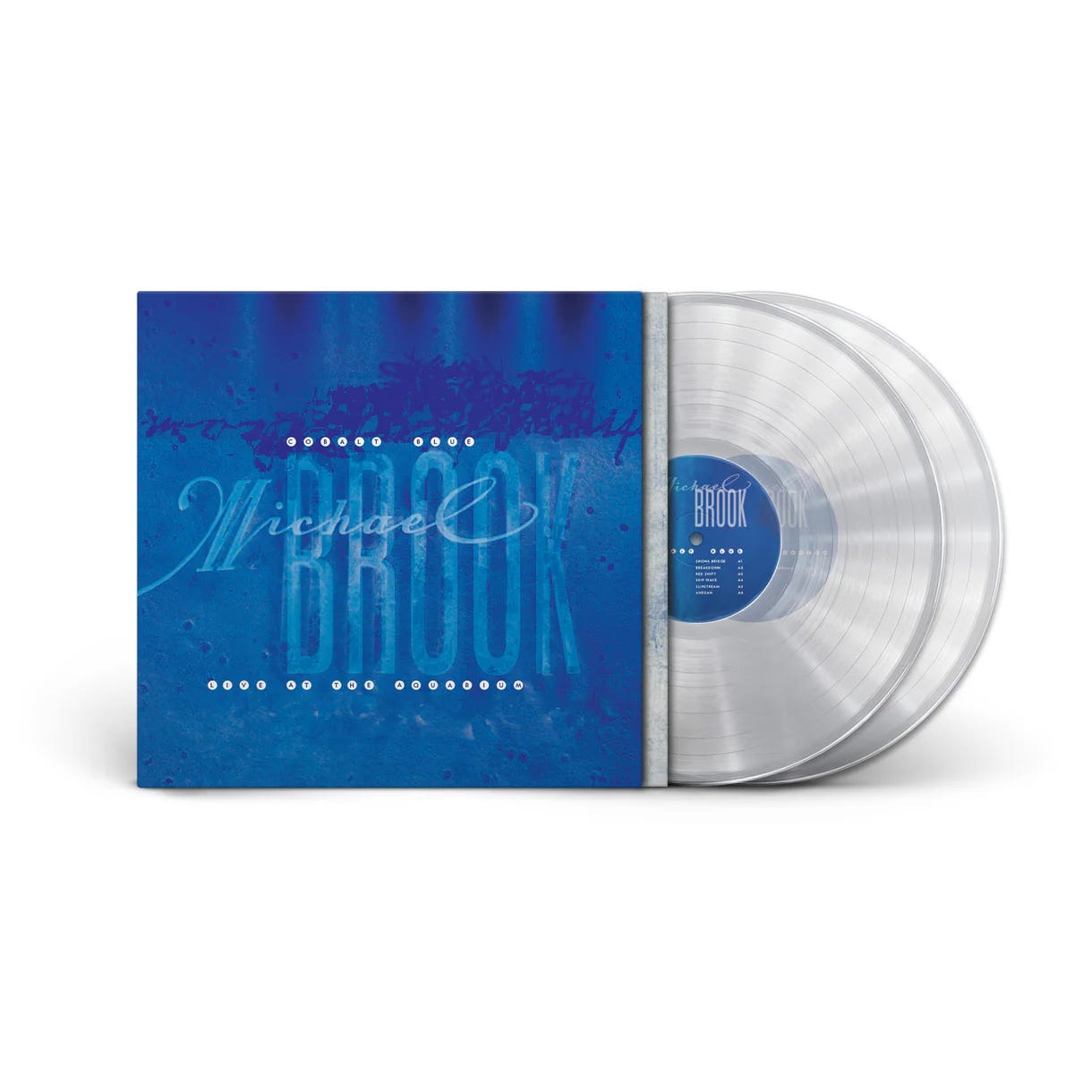
This month sees Cobalt Blue getting a much-needed domestic reissue, paired with another excellent set from that era, the Live At The Aquarium EP. You can order that here. I got to chat with Brook in his home studio in Los Angeles, where he has recently pivoted from soundtrack work to focus on his music again and hopefully do some more touring in the fall.
I recently posted this archival interview with Jon Hassell and I realize your name appears on his music from the very beginning. You’re on the recording side for Vernal Equinox, but at a certain point, you became part of the band.
When I was in college at York University in Toronto, I was taking electronic music courses, which really just wasn’t that much to teach in a certain way, just expose people to stuff and show them how to work a synthesizer in a recording studio. Jon came as a visiting artist and I helped him to do some recording on Vernal Equinox.
But then he asked me to join his band. So now I was mixing the band onstage, but also doing guitar, and live looping of what Jon was doing. So I did quite a bit of touring with him and then helped work on Dream Theory In Malaya (Fourth World Volume Two), recorded at Dan Lanois’ Studio in Hamilton. But I wasn’t that involved in his recorded stuff, it was more the live things.
And when I was at York, there was a kind of experimental music community that was very anti-tonal. Which was fine by me, but I didn’t quite connect with that too much. I didn’t get much feeling from it. It was interesting, but it’s more cerebral. Jon, he was the first person musician I’d come across who seemed to have a little bit of both things, that but with very interesting textural stuff, yet it was tonal and melodic. It kind of opened my eyes to that possibility.
He talked often about music being either above the belt (ie, stuck in your head) or music below the belt, more sensuous and rhythmic. Did he inspire your own sort of research that led you to the concept of the “infinite guitar”?
Peripherally yes, in that I liked Indian music before I met Jon, but I didn’t know anything about it. I still hardly know anything about it. But one thing that appealed to me was the concept of ornamentation in melody as being really important. So, you know, piano music, it’s always “what’s the next note? When does it come? How loud is it?” and all that kind of thing. Whereas with Indian music, there’s an idea that the journey between notes can be interesting too, and bending and ornamenting and all that expression. I really connected with that for some reason. And I liked drones.
Around that time, I also saw Bill Nelson playing in Toronto with something I’d never seen before: an EBow. So he could just play a melody by moving his left hand. I immediately ordered one. But this was back in the day when you mail a check to California or Toronto, and nothing happened.
I had booked time in Dan’s studio to start work on Hybrid. With guitar, it’s to a degree a percussive instrument for me. And I thought, I really want to be able to play melodically this way for part of it. But of course the note would always die and decay, so you could only do so much. So I thought maybe I can make something and I had experimented with electronics a little bit before. So, I made a prototype and it did what I wanted, and then I refined it a tiny bit, and it was fantastic for me.
The “infinite guitar” is born!
I still use it every day! Later on, I finally got an EBow, which is great, but it’s different. It doesn’t allow your right hand to do anything because you’ve got to hold it on just one string. I built it just as I was recording it.
But you didn’t use it on Jon’s albums like Power Spot right?
No, I don’t think I had it built. But also the last thing in the world Jon would want would be another melodic instrument. He’s handling the melody. Jon also heightened my appreciation and awareness of an Indian-type of melodic expression. And he was so refined and sophisticated about it. I never got anywhere near that level.
I only got to interview him a few times, but I miss him.
Me, too. I mean, he had a big influence on me, and he was more…what’s the word, not exactly polarized, but I’d never met anyone to the degree that he was genuinely a nice guy, like very helpful, very supportive. Like he encouraged me to do lessons with LaMonte Young and set it up. He was very aware of what would help move me musically forward and very supportive of that.
And at the same time, he could be a genuine asshole and very cruel to people and very jealous of everybody who – you know, he had a thing of where he –I think, accurately– felt that he was under-appreciated in the music world. But he was his own worst enemy because he could be nasty to people. He was just yin and yang more than anybody I’ve met. The balance of, you know, genuinely nice and genuinely an asshole.
I feel like he never quite got over the My Life in the Bush of Ghosts debacle, where Eno and David Byrne got all the credit.
I feel like that was like a grudge for many decades for him. But at the same time, it’s like, what would you have done with that success or commerciality anyway? I think there was also part of him that really wanted to have musical influence, because he thought it would make music better in lots of ways.
He felt this was an area where people could inhabit and do new, different stuff that was still accessible. The Fourth World idea was…he slightly suffered from being ahead of his time and also many people came to regret doing him favors because he was so prickly.
Before I realized the connection to Jon, I always thought of Cobalt Blue in similar terms, this blueprint or like a roadmap for these you know new kind of directions to go. And commercially, it wasn’t that. Did you sort of feel the same way about that album when it came out?
I had no idea how it would proceed, so I didn’t have a big preconception. I suppose I had some hopes. It was a lot of work, but it was a very slow process because I’m a novice composer. So I had a lot of blind alleys, and that’s where Brian Eno helped a lot.
When it came out, it felt like was there was a couple of little reviews and then that was it. It just sank kind of like a stone. I didn’t think it was ahead of its time, particularly. And so I was disappointed in that sense. I think it also suffered from the fact that at that time, you know, the categories in the record store were very meaningful.
So Cobalt Blue, there’s an element of rock music in it, there’s an element of ambient music. I wouldn’t say it’s that much new age in the sense that there’s often a kind of prettiness and a lightness to new age that there isn’t that much in Cobalt Blue, so I think it suffered from that.
And now it feels like categories are almost meaningless now, or certainly all the walls between them are much lower. And also, I think the world has kind of moved in that much bigger spectrum of music seems to appeal to people. And I’m not sure why, but it’s great. Do you have any theories?
There is this aspect of rediscovery. I obviously came across like a copy of Hybrid and just took a chance on it. But I just would never see Cobalt Blue anywhere, so it’s hard to stumble upon it, so to speak, and then there’s this album I’ve never heard of. So you’re dealing with this “sinking like a stone” aspect, but then Michael Mann hears it and you wind up on the Heat soundtrack.
Well, that definitely helped. And I was really helped by Chris Douridas, who hosted Morning Becomes Eclectic back then. And I mean, everybody in the entertainment world listened to that show every day as they commuted. And Michael Mann would listen to it in his car on the way to edit heat to the edit room for Heat and he would just call Chris and say, “What was that piece? Can you send me this and all that?” And so that’s how that happened. I think that gave me a kind of stamp of credibility in the film world, which helped me get going as a film composer, because otherwise I had no track record or anything like that. It didn’t seem to affect how the album did, but maybe it did.
So even though the album isn’t a commercial success, it does spring you into the soundtrack world, which I think most musicians are ultimately working towards.
I think I’ve acquired a certain degree of legitimacy just by other projects I’ve done. And by living long enough. It is almost like a shortcut because, even if you make it as a musician, your goal is to work on films anyway. So it was like I got the VIP pass. And now I’m taking a sabbatical from film to focus back on music.
I was just in Pakistan in November and recorded some tabla for a new album I’m working on, a solo album. And it just reminded me of how much I enjoyed the music as a music world as opposed to music for film. So that’s what I’m doing now.
You’re working on a new album?
Yeah and also really, really enjoying getting back into playing guitar and performing. That’s really exciting.
“I’m not a cultural purist at all, but I think there are areas where you want to stay respectful to the depth of what other people have done.
The white guy playing the sitar is…you never really want to be that guy.”
So, we’re in this moment where the historical arc bends back towards Cobalt Blue. But this year is the 30th anniversary of Night Song as well? And in juxtapose with Cobalt, the impact and influence of that album was massive. What led you to that project?
Well, Peter Gabriel was aware of Hybrid and he had been working with Dan, so we had crossed paths a couple of times. He thought I might be a suitable producer for an album that Real World wanted Nusrat Fateh Ali Khan to do, which would be a bit of a fusion project. So he invited me to do the first one, which was Mustt Mustt. Neither of us had done anything like this before, so we were feeling our way and trying some things that don’t work and so on. And that ended up, at the end of the day, with everyone happy with the results.
Then they said, well, that one went well, let’s do another one. So we started working on Night Song. And I think a big difference between the two was that I think most was perhaps the first time Nusrat had experienced the studio as a place of exploration rather than documentation. Not just archiving a performance in the studio. Because I think everything else he had done before, you do your album in the afternoon, sing for a while, record it, then back to playing live for people. So I think he was very intrigued by the idea that you could also create there in the studio and compose.
So he participated much more in the process for Night Song. He had ideas about overdubbing or layered vocals or things of that sort. It was a different process and also it was very laborious. The way I think about music is exactly the way DAWs and computers operate, but they didn’t exist then. So, you know, we grabbed bits, we try this here, we combine things, and so on. Incredibly time-consuming to do with tape because it was all tape, where we had a sampler that could hold three minutes of one thing. Sometimes every track in the song had to be put into the sampler, transferred, in three-minute chunks at a time. So it just took forever.
But that was how I thought about music. And it worked out, but it was like building a ship in a bottle to some degree.
I’m really struck by your adaptability in these different settings because obviously you’re producing Qawwali with Nusrat, but you’re also doing raï with Khaled, you’re recording synthpop with Xymox, you’re doing canzone napoletana, you’re doing Carnatic music, and making mbalax with Youssou N’Dour. You’re pretty integral to world music at the end of the 20th century. What is it that makes you so adaptable to these extremely varied situations, whereas most Western music can’t readily transfer to their system and scales?
I haven’t really thought about that. I think maybe a lack of musical education helps in the sense that I don’t know anything about Indian music and I’ve never had any musical education. So I don’t know how to read music. Perhaps it slightly forces me into a more real time way just by what I just said. Making Night Song, that it encouraged me to maybe always slightly try and stay in the moment. “Does this feel like it’s going to be good?” Maybe that’s part of it. And I mean, you know, one thing I think that is maybe not that noticeable, but if you look at the music in Night Song and look at the music in Cobalt Blue, there’s a lot of overlap.
That was something I noticed after working with a few people from different cultures that I learned about our culture, which is that we are staggeringly flexible and have such a big spectrum of things. Often you’re recording with a band and you say, hey, why don’t you try this kind of thing? Or let’s bring in another, like a xylophone player or anything. And there’s a sort of, of course, there’s rigidity in some ways, but there’s also a real openness with the idea of the recording studio as an instrument. With other cultures, they have very long and deep traditions and an idea that this is how you do it. And so they become incredibly good at that thing.
And somebody like Armenian duduk player Djivan Gasparyan and with Nusrat, too, to a large degree, if you listen to their parts, they’re kind of what they always do, it’s just we’ve changed the context of what’s behind them. And there’s a little bit of, you know, adaptation, but a surprisingly small amount. Part of the challenge with tNight Song is finding things that don’t conflict with the other culture, but never try to imitate it. Because, you know, the white guy playing the sitar is…you never really want to be that guy. I’m not a cultural purist at all, but I think there are areas where you want to stay respectful to the depth of what other people have done.
Right. But that doesn’t mean you can’t be creative and try new things. And Night Song was really a game changer in Pakistani music?
I mean, I knew it was popular there. I went there about 30 years ago to see Nusrat. And I didn’t understand how big it is there. I mean, it’s sort of their popular music is before and after Night Song. And it’s kind of like Sgt. Pepper’s or something. And like, I’m a star in Pakistan. People were too nervous to meet me. And quite a few people said they decided on a musical career because of that album. I was shocked.
Because, you know, word doesn’t really get back to the West, but yeah, it’s just unbelievably huge there. Yeah, it’s a nice coming together that this is gonna, you know, they’re re-releasing it now.
You’re doing stuff with Youssou N’Dour, you’re you know, doing Carnatic music, was there was a similar sort of seismic effect in those scenes?
I don’t think there was because my role was a bit different with Youssou, it was closer to that of the traditional producer. I mean, I did get him to do a song with a string sextet, which was definitely something different, but I wasn’t involved in any compositions. Same with Khaled. I think those were more defined roles and it wasn’t my job wasn’t to create something new. It was to bring out the best of what they were doing.
So were you kind of surprised by the trust that sort of led to Night Song? Like that openness and that sort of willingness to kind of let you cook, for lack of a better word?
With Mustt Mustt, I think both of us were like “Let’s see if this works.” We were just trying things and the reception to that gave Nusrat some confidence that that kind of collaboration could have a good result. He was quite pleased that it connected to younger people in Pakistan.
Except my big faux pas of screwing up all the lyrics. Which it turned out to be a big deal, but I just hadn’t…I can’t believe I didn’t think of it at the time. But, you know, I just edited what sounded good musically., not even thinking if his words made sense.
Oh! So when you did it, you ended up chopping up his vocals in a way that…
Yeah.And Nusrat got a bit of flack in Pakistan for doing that. It was totally my fault and we didn’t find out until it was too late. You know, it takes six weeks to mail a cassette to Pakistan. But he was very gracious about it. And then for Night Song, now having that knowledge, we still recorded long sections of Nusrat playing over a four or 16 bar loop, because he likes to get up some momentum going in his performance. Moving from an A to a B section just throws off his momentum. So I just took the A section, looped it for 20 minutes. He’d do a whole bunch of that of singing, and then say B section. We treat it like a new song almost when we started.
Then I had to transcribe phonetically the Farsi of every take and see, okay, this follows in exactly this way. So then I combined them the way he sang them. But that’s another part of the laboriousness of the whole thing. So that ended up being fine.
I’m curious if you kind of keep up with modern world music in any way. Or who do you see as like the Youssou or the Nusrat of their culture?
It’s not really the same as it was back then. I think another factor that is exciting about taking a sabbatical from film work is I have no idea what’s going on musically pretty much anywhere. I have no leftover bandwidth at the end of the day to listen to music. And also, how do you, now that music is like tap water, how do you curate? How do you navigate? How do you find stuff? Skills at that. So I had, that was the other thing I wanted to do is just have more energy to listen to and explore music. I don’t know if there’s anything I’m aware of that has clicked for me that was made in the last 20 years or so.
I’m probably with you there. What’s something that you find that you can kind of get back to and enjoy?
Well, J.J. Cale I still really like a lot; I think he stands up well. A lot of Ennio Morricone stuff, quite a bit of Stevie Wonder and the Beatles, Mahotella Queens. Dntel or however you say it, I really like his stuff. But I haven’t really listened to that much music. And I’m sure there is good stuff, but I don’t know. So please send me any recommendations.
Thanks for this. I've been getting more and more obsessed with avant garde/organic/world music as it relates to the 80s/early 90s--to me the most inorganic, un-avant gard period in modern music. This is all making me rethink that. I've been really drawn to these global sounds but filtered through a big box, primitive/dated production style. I like how it's an exercise in contrasts. I'm thinking Hassel's Power Spot, Mark Isham, Patrick O'Hearn, Sting, Peter Gabriel, even Fleetwood Mac's Tango in the Night and Pink Floyd's A Momentary Lapse of Reason. That Total Blue album from a couple years ago really got me going deeper into this world. If you haven't heard it, Anthony Calonico's Spacious Heart fits right in and is one of my fav records this year.
Anyway, I'm not sure what point I'm making aside from: i want more.