
Filles de Kilimanjaro
Some stray notes on this week's Pitchfork Sunday Review

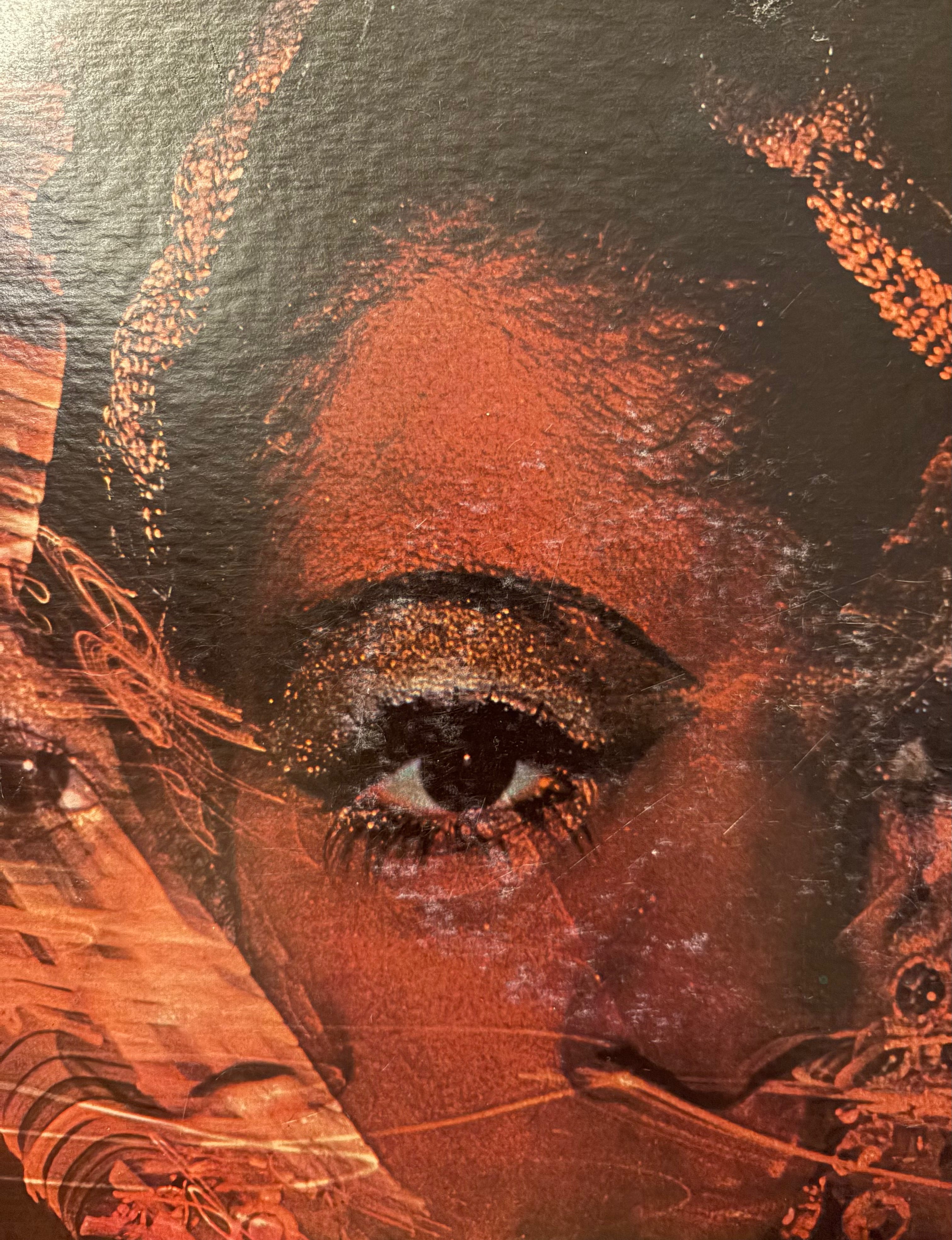
La belle mystérieuse Mademoiselle Mabry
Las Sunday, I wrote Pitchfork’s Sunday Review about Miles Davis’ oft-overlooked Filles de Kilimanjaro. I’ll admit I’m a little late to the splendors of Miles’ Second Great Quintet, a group whom Greg Tate likened to quantum mechanics and Amiri Barak called “the all-time classical hydrogen bomb and switchblade band.” If you read the author’s note to Cosmic Music, my introduction to Miles (and jazz in general) came from an encounter with “Black Satin” on a mixtape as a teen.
At times, I feel like I’ve been trying to reassemble all my cells since that moment of instant disintegration way back when, working my way backwards through his catalog ever since. (Looking on my shelf, I also realize I still have a Sorcerer-sized gap.) I had already meditated on electric Miles at the peak of his powers when I wrote a Sunday Review about Get Up With It a few years ago (which, if I only had to choose one, might be my favorite review I ever filed at Pitchfork).
So when I was tasked to pick another Miles album to write about, I wondered what in that iconic run of Second Quintet albums would be worth exploring at length. My ears have never quite become attuned to acoustic Miles, his horn sounding like a little toy in comparison to that wicked wah-wah tone he had in the 1970s. And while I’m in thrall to the music, the subtleties of the Quintet slip by sometimes.
Something about Filles spoke to me though. It seemed to straddle an ever-widening divide between jazz’s acoustic post-bop past and electric fusion future. The album captured that great band splintering in real time, while Miles seemed at a loss for just how to proceed forward. While his name doesn’t appear on the album in any way, Gil Evans played a major part in the album, the last real time that Davis and Evans would collaborate like so. There are traces of Ray Charles R&B in the grooves of Filles, some times when I feel there’s a little boogaloo sway to how it swings. It’s not quite rock, though the rock writers of that era felt like Miles was moving towards them (they were right). It’s not yet fusion, but it is seeking a hybrid of forms.
I tried to stay away from Tate’s essay on electric Miles (collected in Flyboy in the Buttermilk, thankfully back in print as of next week), but love the lone sentence he bestowed on that album:
“Kilimanjaro is provocative for how much static tension Miles generates using James Brown riffs, for Tony Williams’s ambient drumming, and for how the voicings on ‘Tout de Suite’ spookily predict Herbie Hancock’s Mwandishi band (if you want to experience musical deja vu, play ‘Tout de Suite’ back-to-back with ‘Water Torture’ from Hancock’s Crossings, then hear that against the third and fourth sides of Agharta–curiouser and curiouser).”
You can read the Pitchfork Sunday Review of Miles Davis’ Filles de Kilimanjaro here.
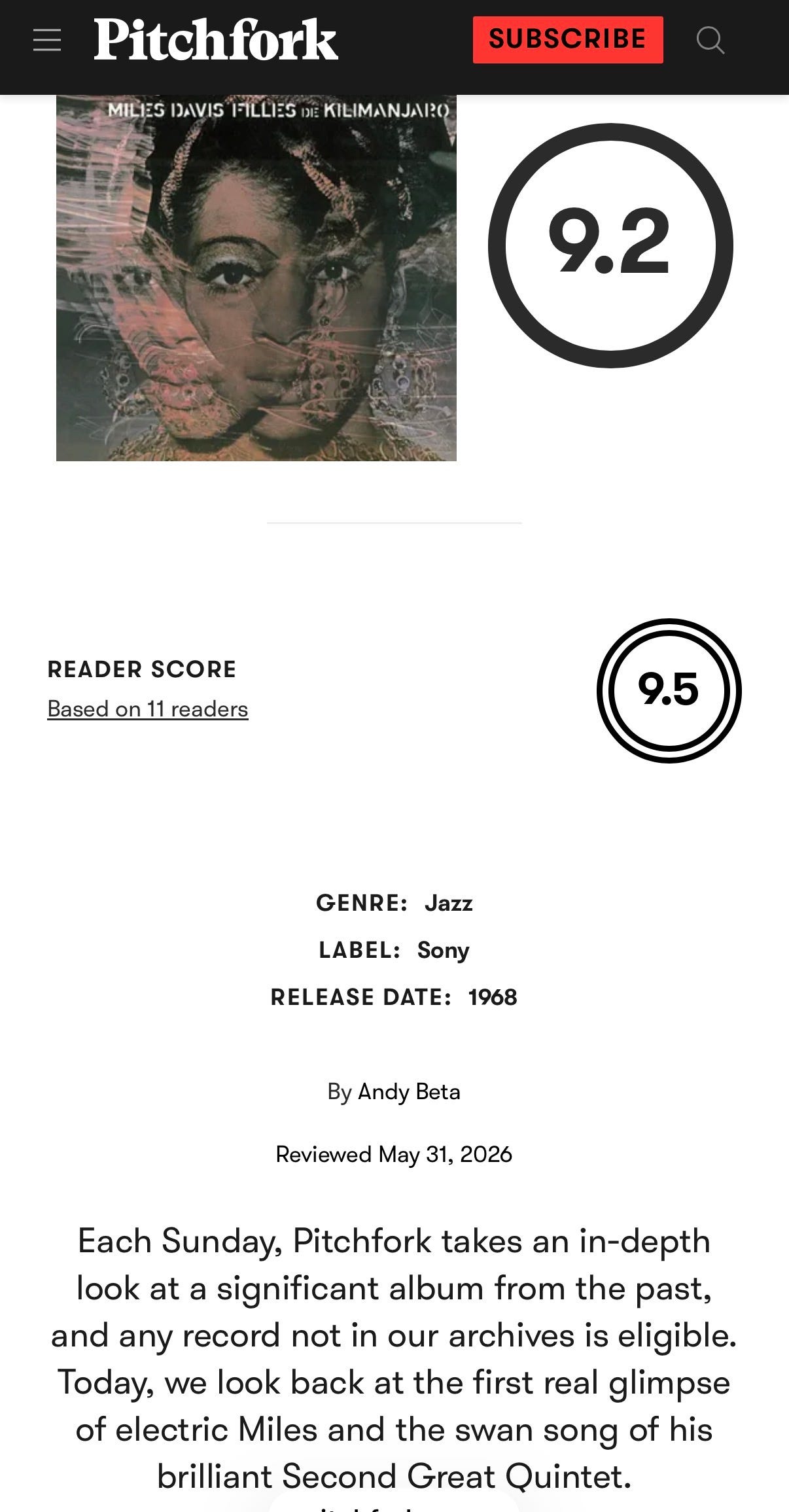
Filles was well-received and hailed upon its release. It’s a fascinating album, yet one made wholly irrelevant by time Miles dropped In a Silent Way a mere six months later with a different band and different strategy to working in the studio. Rock writers loved it even more while jazz critics bemoaned the electric instrumentation and studio editing on it. And despite the titular peak in its title, Kilimanjaro would be little more than a dot in the rearview mirror by the time of Bitches Brew the next year.
Spending the past few weeks with it made me love the album even more, though I also had to acknowledge Miles’ legacy of being an abuser of women (even Tate had to call him out on that shit). I wish I could have spent more time unpacking his brief relationship with Betty Davis (“Mademoiselle Mabry”), but it didn’t quite fit. If anything, the album felt at times like the work of a great musician fighting against middle age and increasing irrelevance in the only way that most men know how: by fucking a woman half his age.